Client
EmpowerRD
Context
Context
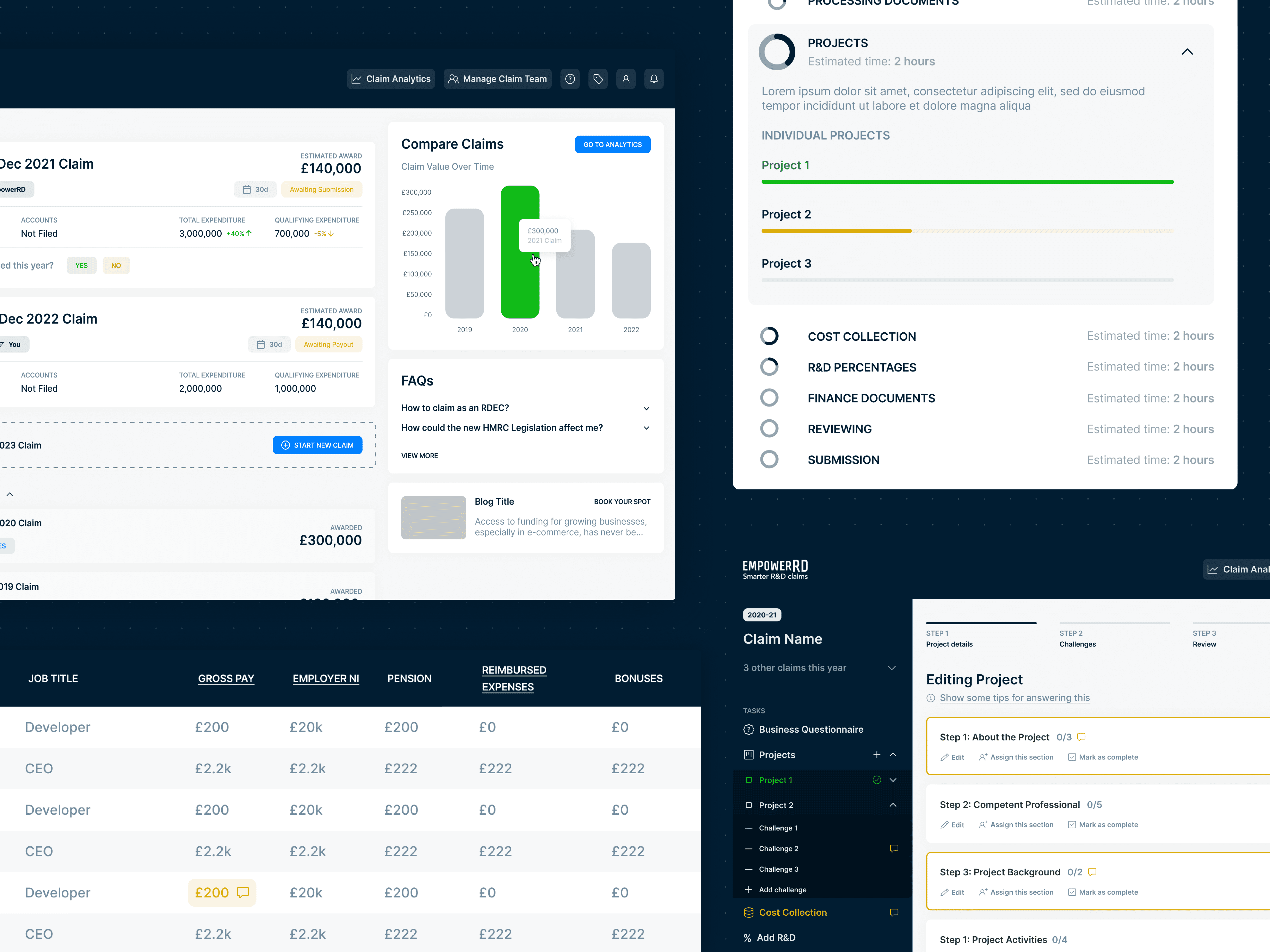
I worked as the sole designer on EmpowerRD, a platform used to manage R&D tax claims.
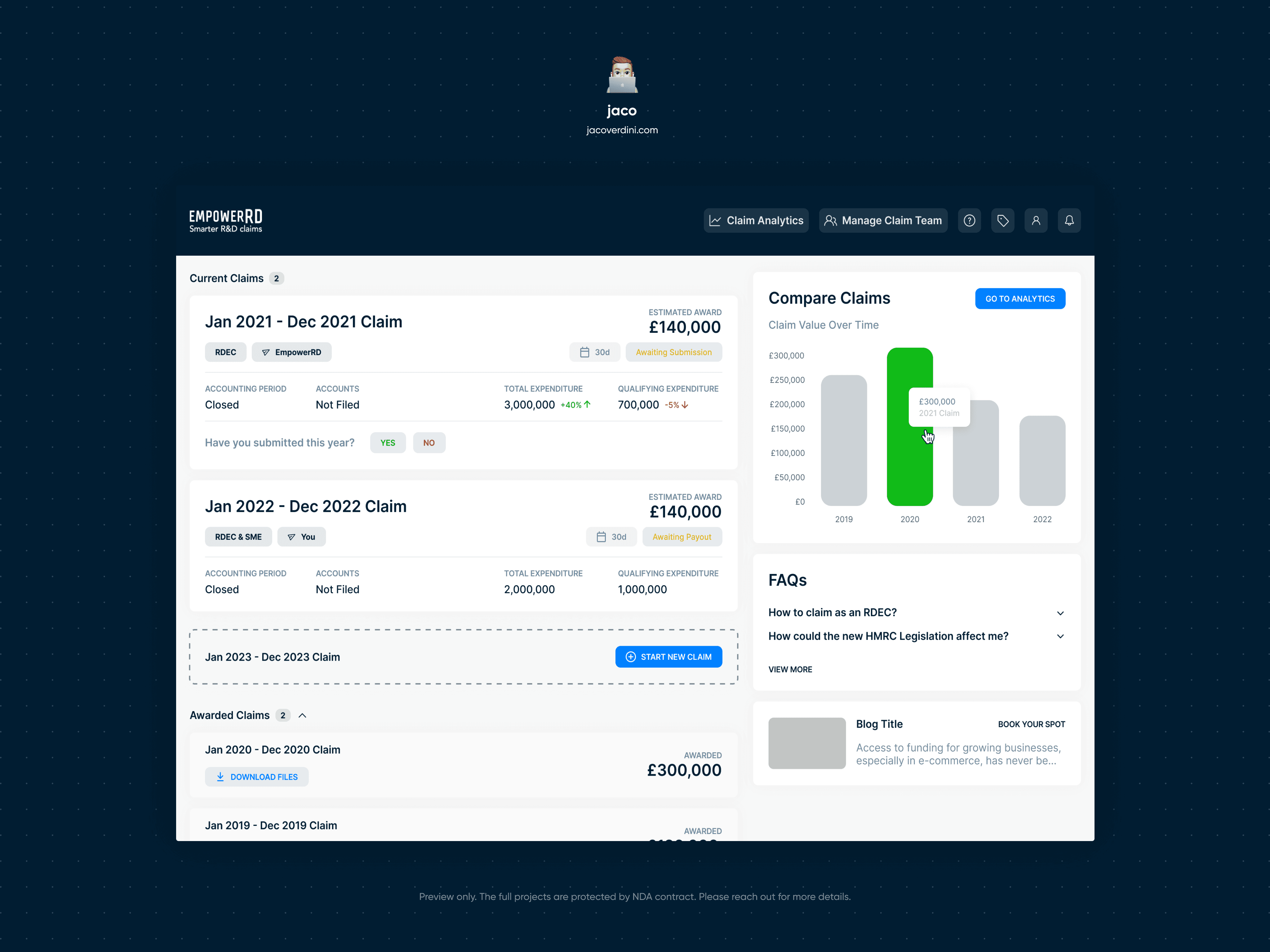
The product is used by both internal teams and clients to complete and review claims made up of multiple documents, financial inputs, and technical descriptions.
I collaborated directly with a Project Manager and developers, owning the redesign of the dashboard and the integration of new features from concept to delivery.
The Problem
The Problem
The claims process was fragmented and difficult to manage, especially as users had to navigate large volumes of structured and unstructured data.
From user interviews, two core issues emerged:
Feedback was slowing users down
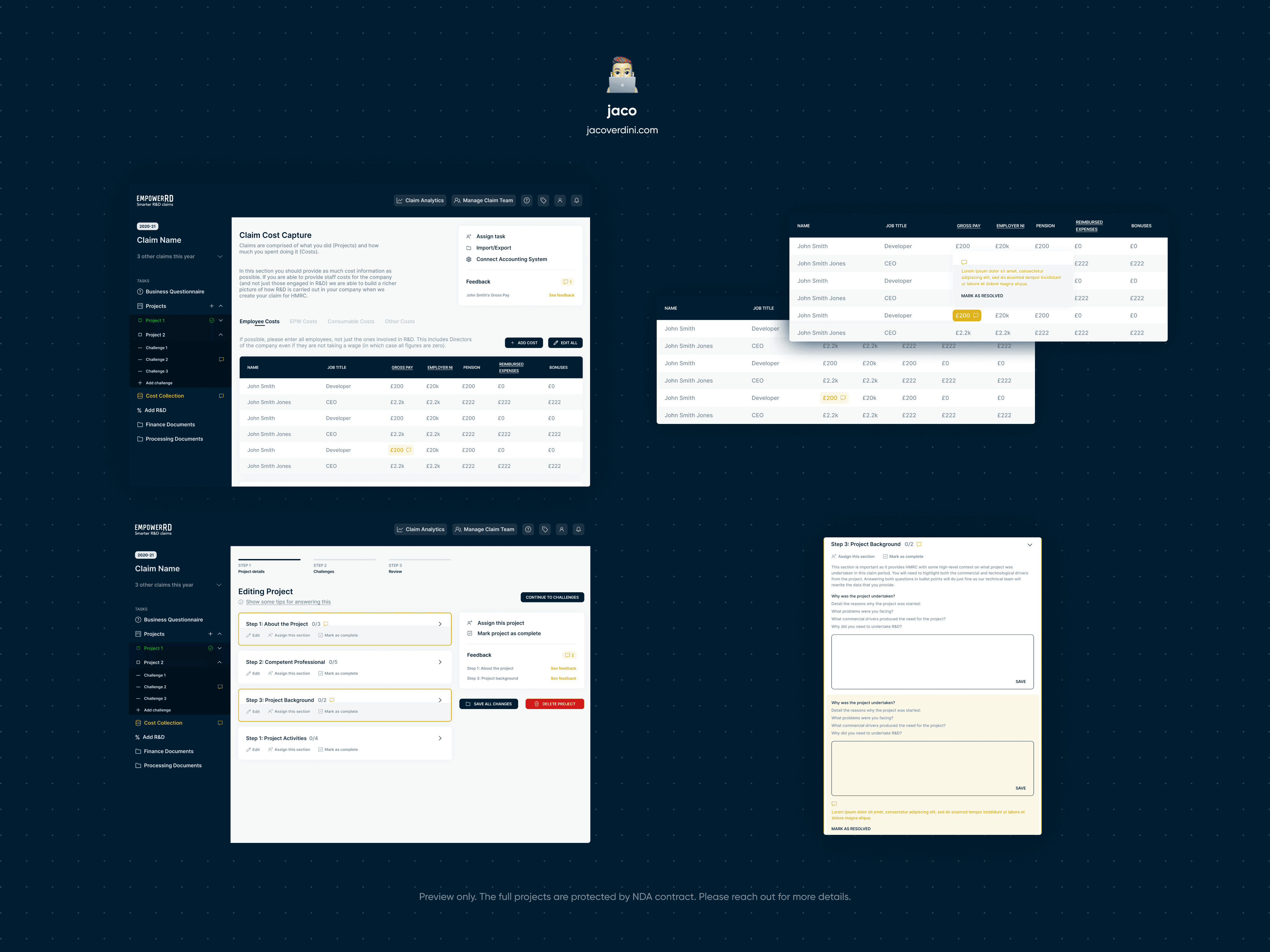
Feedback was distributed across multiple sections and pages, making it difficult to track and resolve. Users often had to search manually for comments, especially within tables where feedback could relate to a single cell.
This led to missed feedback and multiple revision cycles.
Progress tracking was unclear
Claims included sections with very different levels of effort—some quick to complete, others requiring days of work. However, users had limited visibility into what was completed, what was pending, and where to focus next.
As a result, users often felt lost and struggled to resume work efficiently.
My Role
My Role
Sole Product Designer
Led UX and UI redesign of the dashboard
Defined navigation, interaction patterns, and component behaviour
Collaborated closely with PM and developers to deliver features
Approach
Approach
Rather than focusing on a purely visual redesign, I reframed the problem around efficiency:
How can we reduce time spent searching, and increase time spent completing tasks?
I focused on two key areas:
Making feedback immediate and actionable
Making progress visible and directional
Key Design Decisions
Key Design Decisions
1. Centralising and structuring feedback
I redesigned how feedback is surfaced and accessed across the platform:
Highlighted sections containing unresolved comments
Introduced a fixed side panel summarising all feedback
Enabled users to jump directly to the relevant section
Added cell-level feedback for tables to target specific data points
This removed the need to scan entire documents just to find issues, making feedback faster to act on.
2. Turning progress into a workflow tool
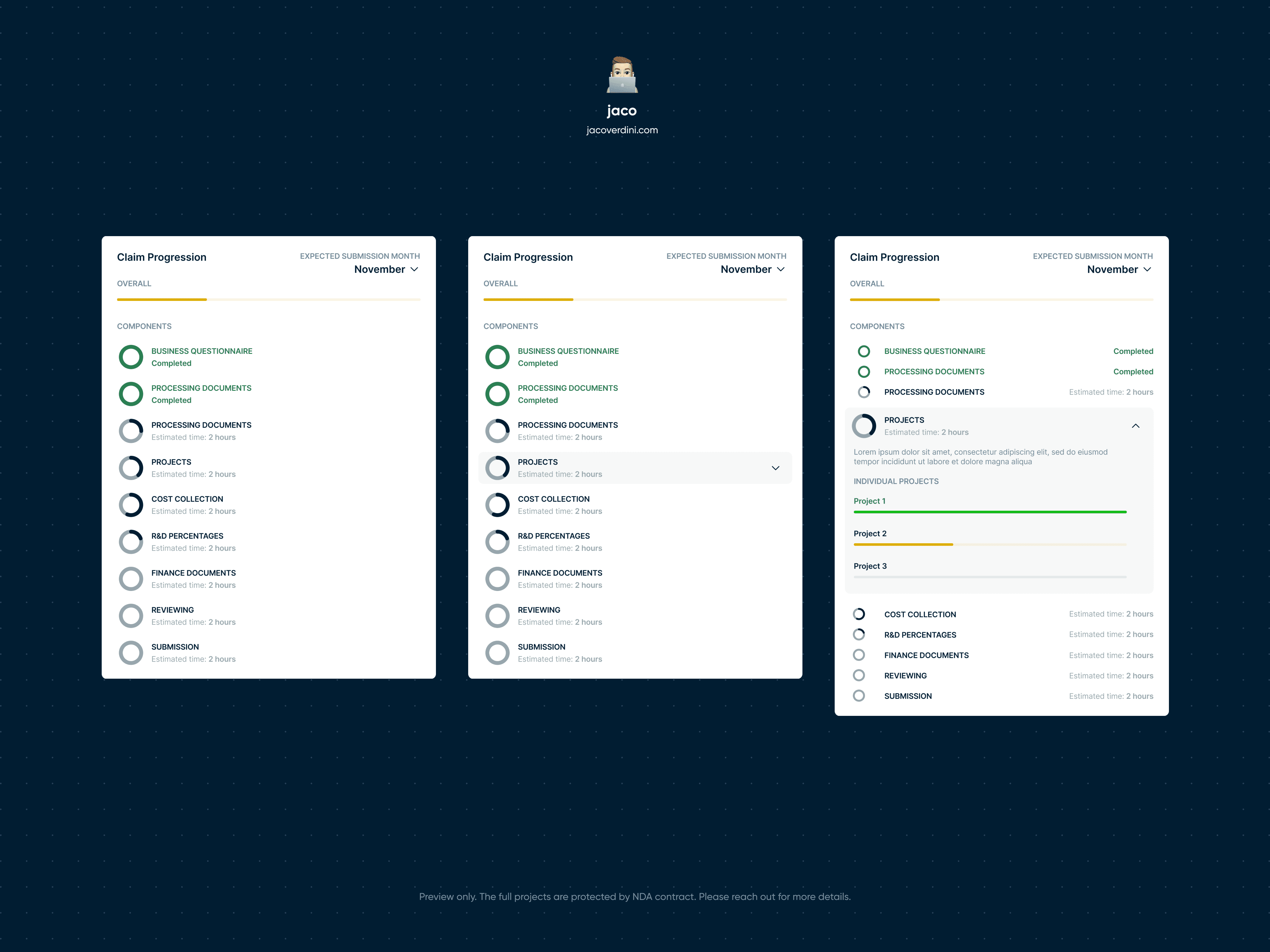
Progress was redesigned to actively guide users rather than simply inform them:
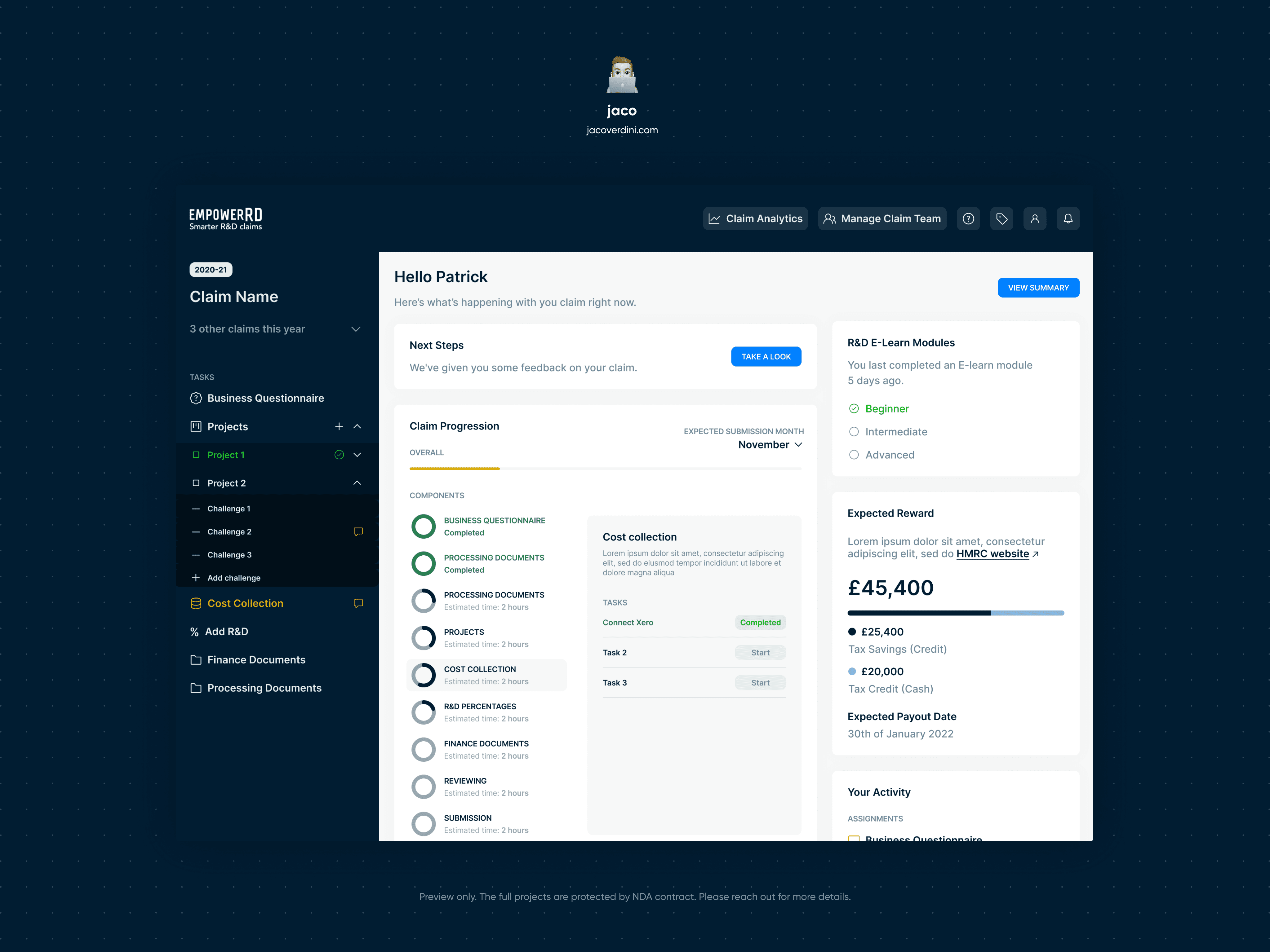
Sidebar navigation structured around claim sections
Status indicators showing completion and outstanding work
“Next Steps” widget allowing users to resume instantly
Clear visibility of both overall and section-level progress
This helped users understand exactly where they were in the process and what to do next.
3. Managing complexity without overwhelming users
Given the technical nature of the platform, the goal was not to simplify the content, but to make it manageable:
Introduced clear hierarchy and spacing across sections
Used progressive disclosure to reduce cognitive load
Maintained a clean layout while preserving access to detailed data
This allowed the platform to support complex workflows without feeling heavy or confusing.
Outcome
Outcome
The redesign improved usability and efficiency across the platform:
Reduced time spent locating and resolving feedback
Fewer revision cycles between users and reviewers
Improved navigation across complex claims
Greater clarity on progress and next steps
Detailed metrics available upon request.
Reflection
Reflection
This project strengthened my ability to design for complex B2B systems, where the challenge lies in structuring information and guiding users through multi-step workflows.
Working as the sole designer required balancing business needs, technical constraints, and user experience, while maintaining a clear and scalable product vision.