Client
Happiness House
Context
Context
I worked as the sole designer on Happiness House, a Happiness House platform focused on mental health and wellbeing.
The product combines social media features with wellness tools, allowing users to share updates, join events, attend courses, and connect with others through shared interests.
I collaborated directly with the CEO, a Project Manager, and developers, leading a full UI redesign and the integration of new features across the platform.
The Problem
The Problem
The platform had evolved into a feature-heavy ecosystem, but its structure and usability had not kept up.
From research conducted prior to the redesign, two main issues emerged:
Navigation and feature discoverability were unclear
The platform included multiple sections—such as chat, events, courses, and community—but users struggled to understand how to move between them or find relevant features.
This created friction and reduced engagement across key areas of the product.
The experience did not scale well across languages and inclusive design needs
The platform was available in both German and English, but translation alone was not sufficient:
German compound words created overly long labels and CTAs
UI components needed to support gender-neutral language
Some interaction patterns did not adapt well across languages
This led to inconsistencies and usability issues across different user groups.
My Role
My Role
Sole Product Designer
Led UX and UI redesign across the platform
Defined information architecture and navigation patterns
Designed new features and core experiences
Collaborated closely with CEO, PM, and developers
Approach
Approach
Given the complexity of the platform, I focused on:
Improving information architecture and navigation clarity
I restructured how features were grouped and accessed, ensuring users could move between sections intuitively.
Designing for flexibility and inclusivity
I adapted UI components and patterns to support multiple languages and inclusive content, rather than relying on direct translation.
Validating decisions through testing
I conducted user testing to evaluate navigation patterns and feature discoverability, iterating based on feedback.
Key Design Decisions
Key Design Decisions
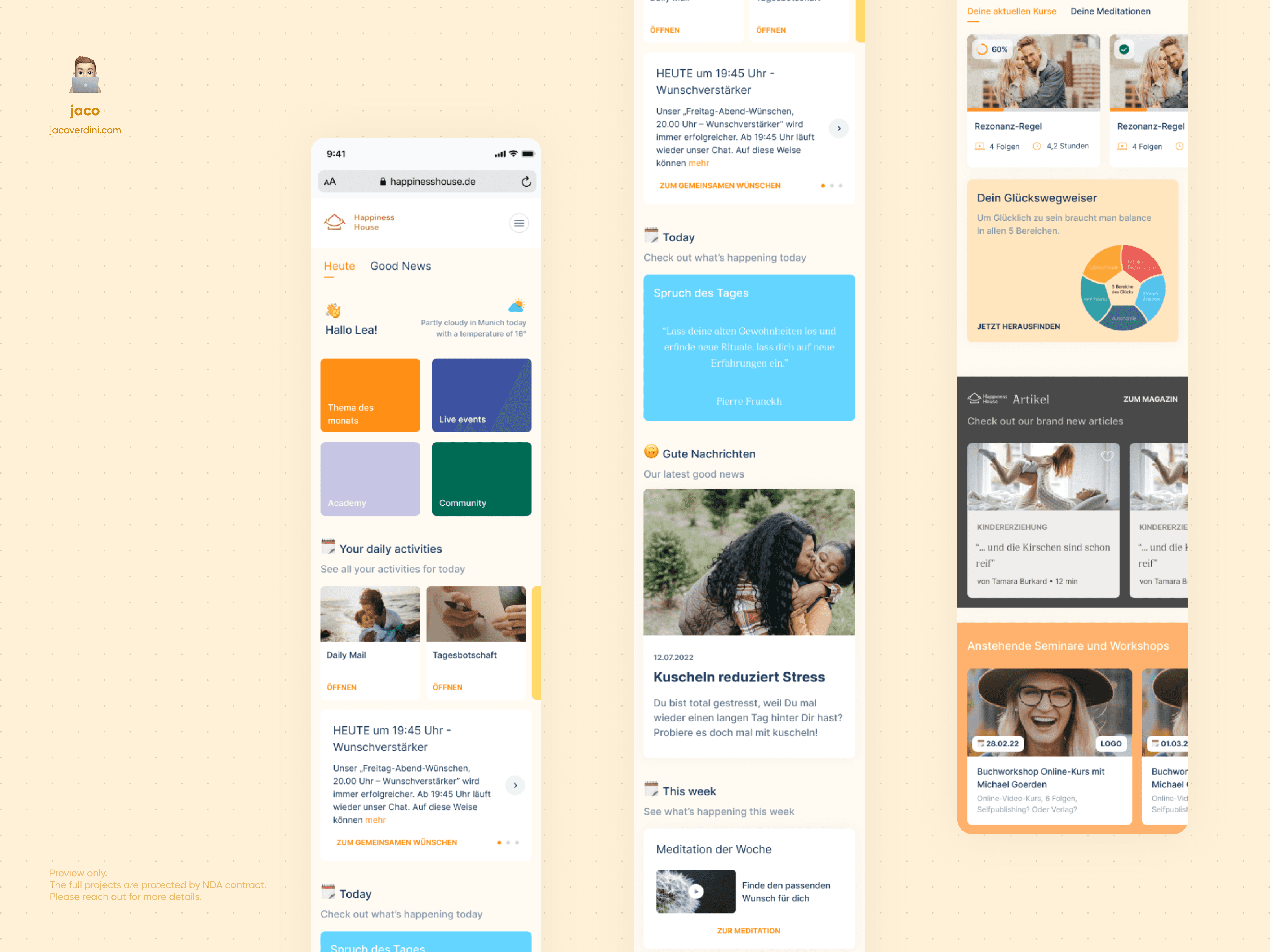
1. Simplifying navigation across a feature-heavy platform
I reworked the platform structure to make features easier to access and understand:
Grouped related features into clearer sections
Reduced cognitive load by limiting visible options at each level
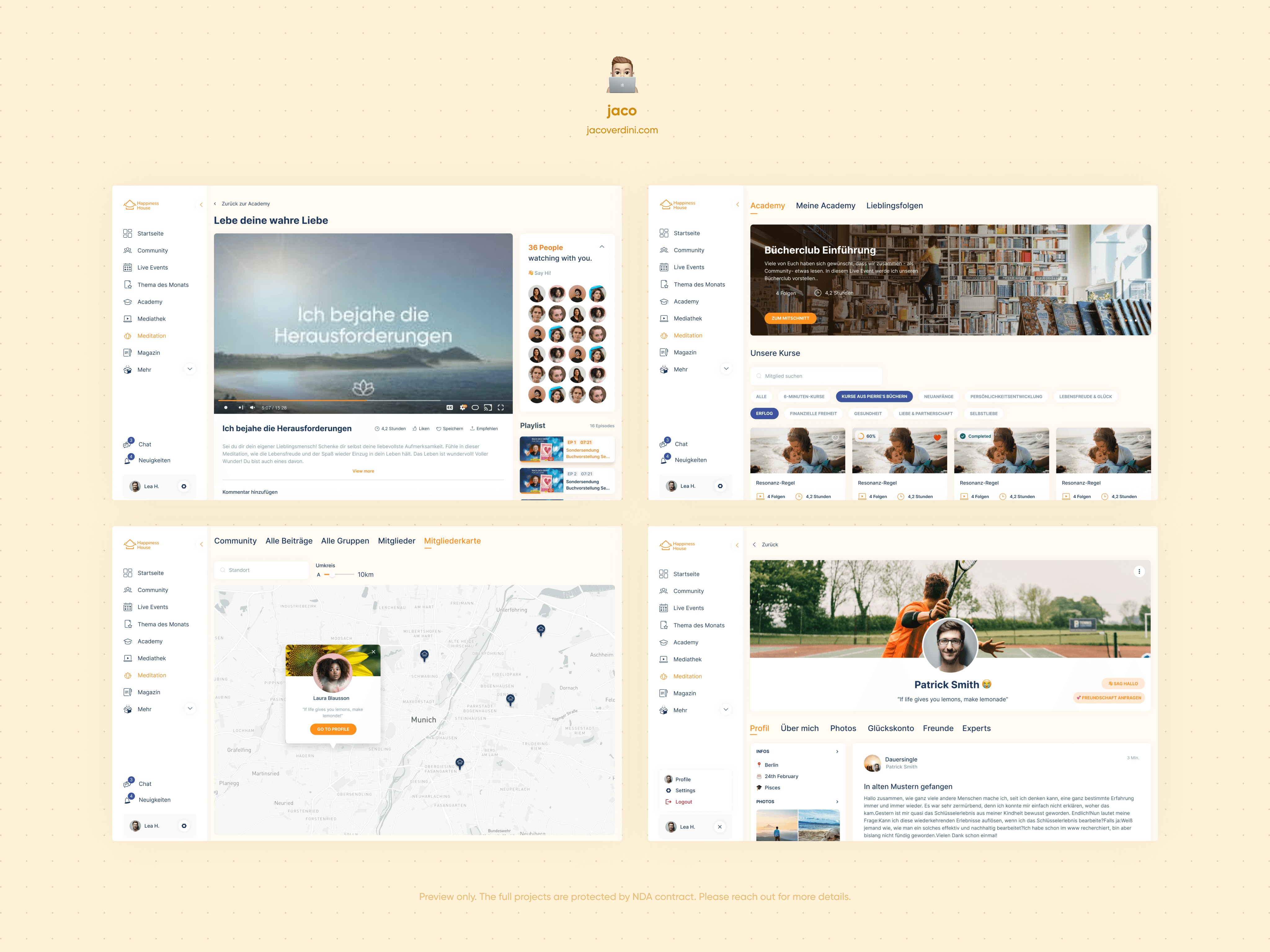
Created more consistent navigation patterns across the product
This improved discoverability and made the platform feel more cohesive despite its complexity.
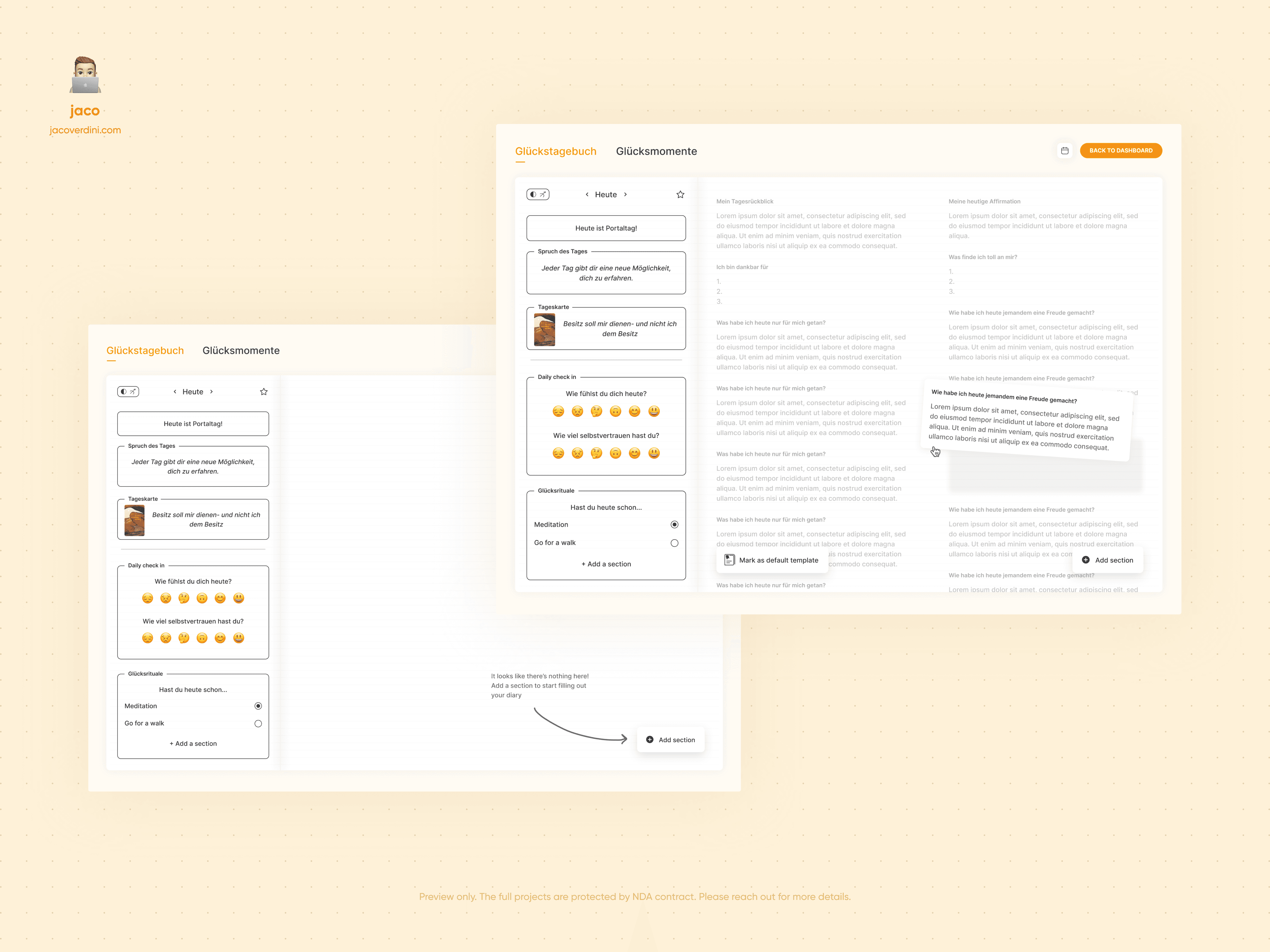
2. Designing a flexible and structured diary experience
The diary was one of the most used features, but it needed to support two distinct behaviours:
Habit tracking
Personal journaling
I redesigned it as a dual-layout system:
A left panel for managing “rituals” (recurring habits and tasks)
A right panel for daily diary entries
Users could:
Create and track habits over time
Write daily entries on a fresh page
Customise layouts using draggable content blocks and prompts
This allowed users to structure their experience based on their personal needs, rather than forcing a single format.
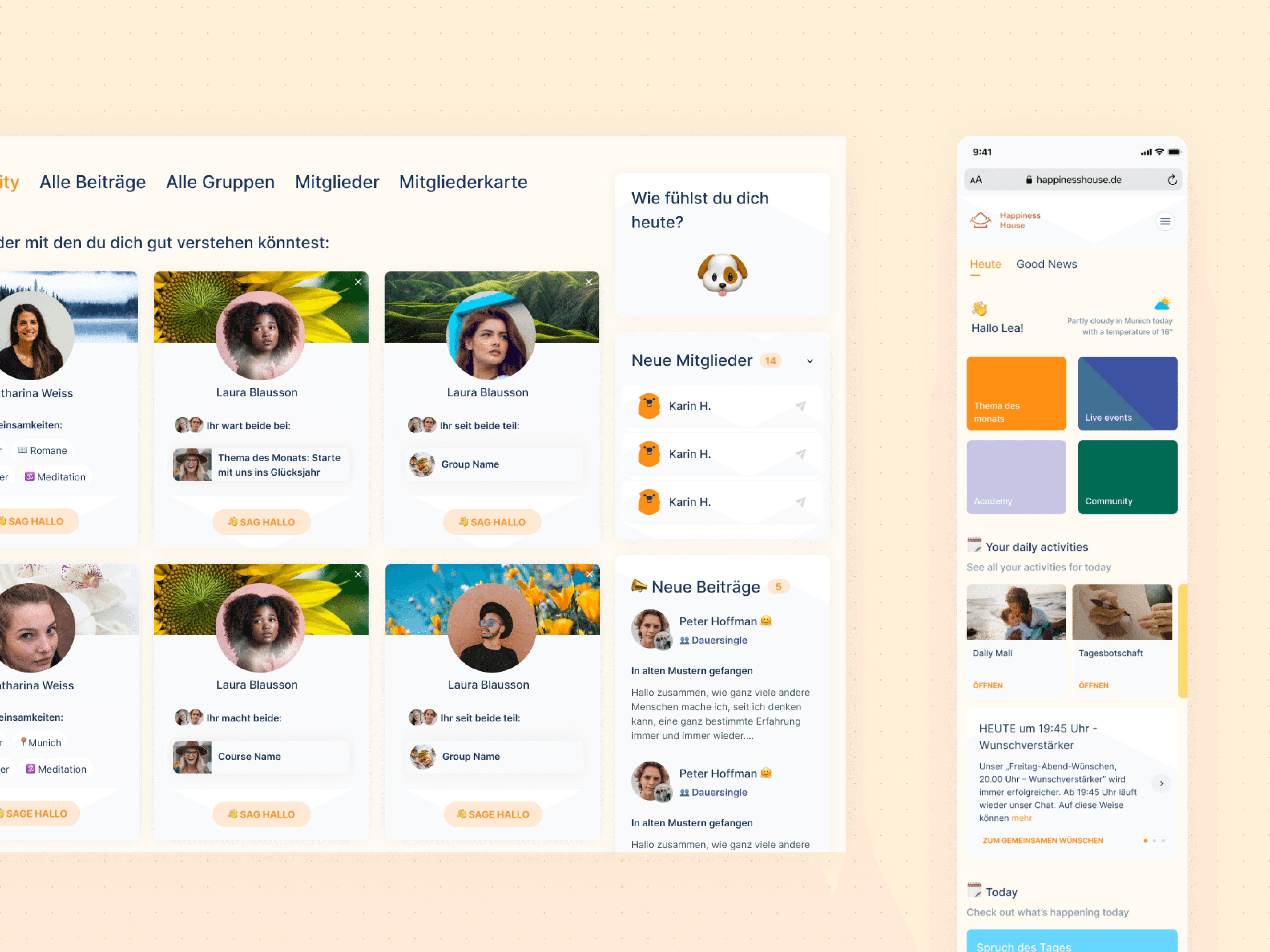
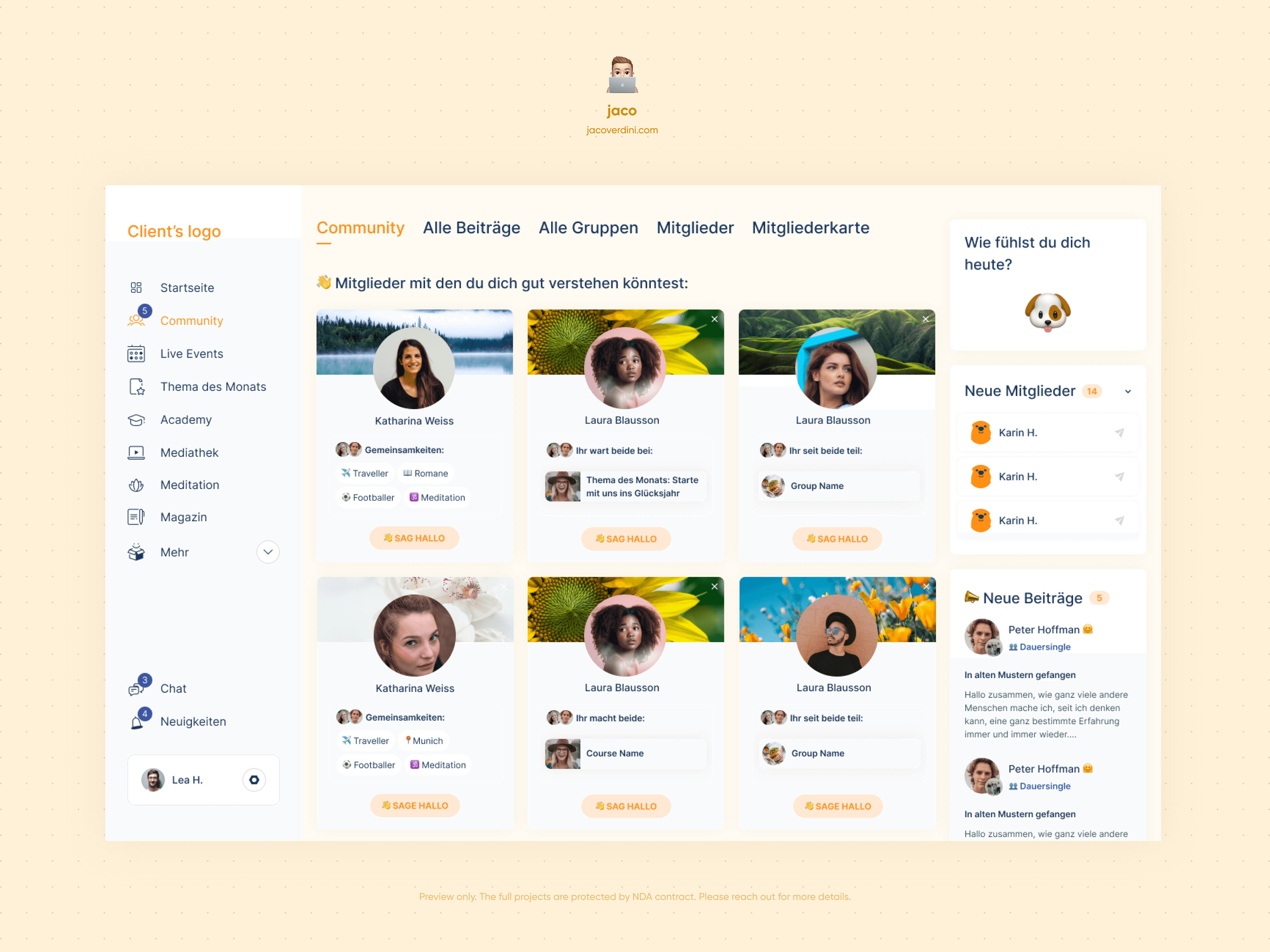
3. Creating a more engaging and intuitive community experience
The community page was redesigned to improve user discovery and interaction:
Highlighted user profiles visually (photo, name, identity)
Included contextual information explaining why users were suggested
Introduced a clear “Say hello” action to initiate conversations
This made it easier for users to understand connections and take action without friction.
4. Adapting the UI for internationalisation and inclusivity
Rather than treating translation as a content layer, I adapted the UI system itself:
Adjusted components to handle longer German text strings
Designed flexible layouts for variable label lengths
Ensured dropdowns and selection components supported gender-neutral language
This created a more consistent and inclusive experience across languages.
Outcome
Outcome
The redesign improved usability, clarity, and engagement across the platform:
Improved navigation and feature discoverability
Increased usability of core features such as the diary and community page
More consistent experience across German and English versions
Reduced friction when interacting with complex or feature-rich sections
Detailed metrics available upon request.
Reflection
Reflection
This project reinforced the importance of structure and clarity when designing feature-rich platforms.
Rather than removing complexity, the goal was to organise it in a way that feels intuitive and flexible for different types of users.
Working closely with leadership and as the sole designer also meant taking ownership of both strategic decisions and execution, ensuring the product remained cohesive as it evolved.