Client
Silboo

Context
Context
I co-founded and designed Silboo, an AI-powered platform that helps users discover events in their city.
The product is currently available in Las Palmas de Gran Canaria and Salerno—two locations where we identified a gap in how events are aggregated and discovered, particularly for people who are not locals.
The idea originated while I was living in Las Palmas de Gran Canaria, a popular hub for digital nomads. Despite the high volume of social activity, events were fragmented across multiple platforms, making discovery inefficient and inconsistent.
As a co-founder, I led the product design end-to-end, from research and concept to UX/UI, branding, and prototyping.
The Problem
The Problem
Event discovery in small-to-medium cities is highly fragmented.
Through user research, we identified several recurring issues:
Events were scattered across multiple platforms
Users had to search across Instagram, Facebook, venue websites, and other sources to find relevant events.
This made the process time-consuming and unreliable.
Event discovery lacked personalisation and clarity
Users struggled to find events tailored to their interests, and listings often lacked key information such as:
Clear pricing
Exact location
Event source or organiser
Language accessibility
Existing platforms ignored smaller cities
Most competitors focused on large metropolitan areas, leaving smaller cities underserved.
As a result, venues relied heavily on their own channels, leading to inconsistent visibility and poor discoverability.
My Role
My Role
Co-founder & Product Designer
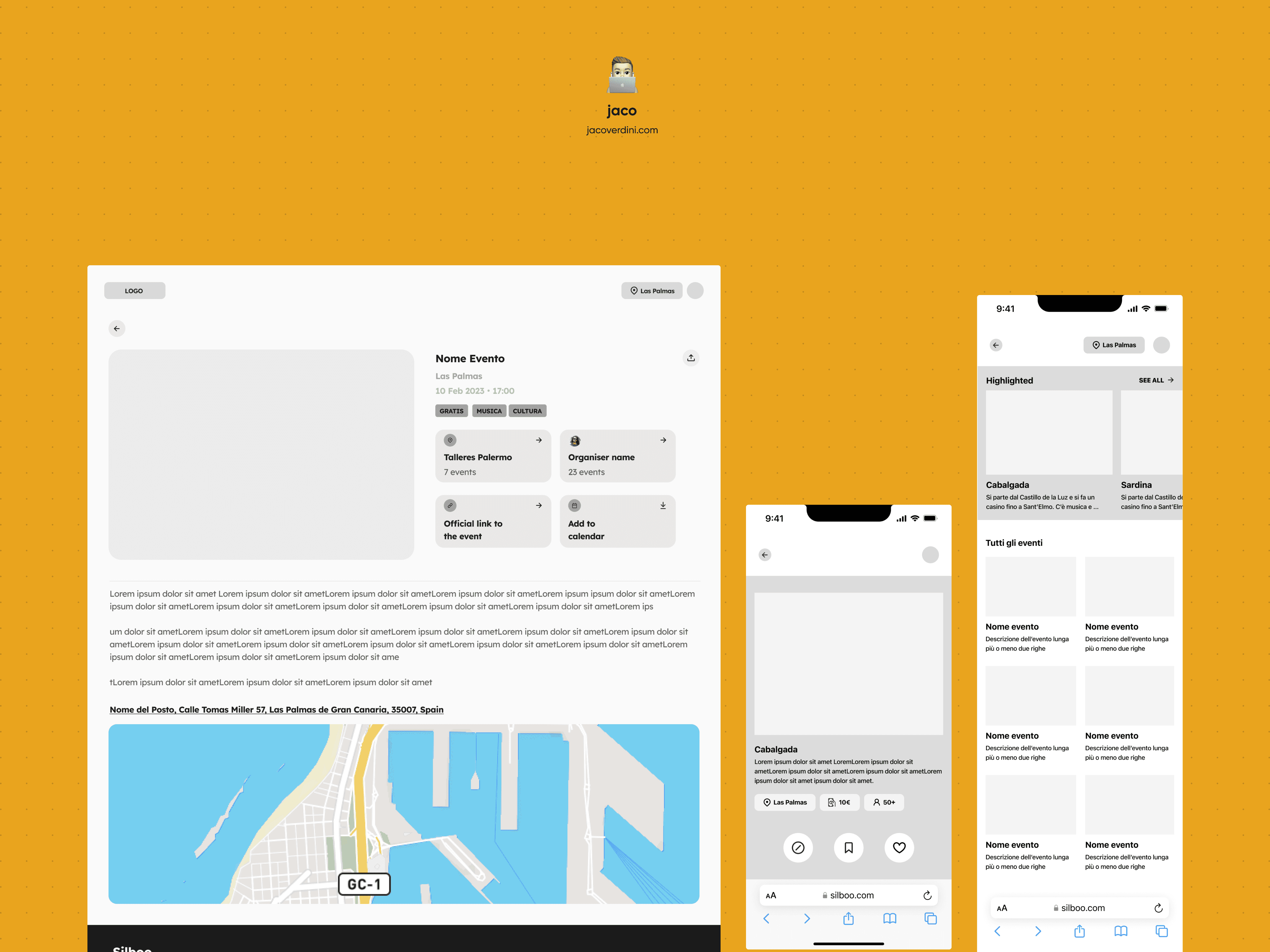
Led UX/UI design from concept to high-fidelity prototypes
Defined product vision, user flows, and interaction patterns
Designed branding and design system
Conducted user research and testing
Approach
Approach
We approached the problem with a clear goal:
Make event discovery effortless, centralised, and relevant
To achieve this, I focused on:
Reducing friction in browsing and filtering events
Ensuring all key information is visible at a glance
Designing a flexible system to handle complex event structures
Validating assumptions through user testing early in the process
Key Design Decisions
Key Design Decisions
1. Designing a simple and focused MVP experience
For the initial version, I prioritised only the core user needs:
Browse events in a specific city
Filter events based on preferences
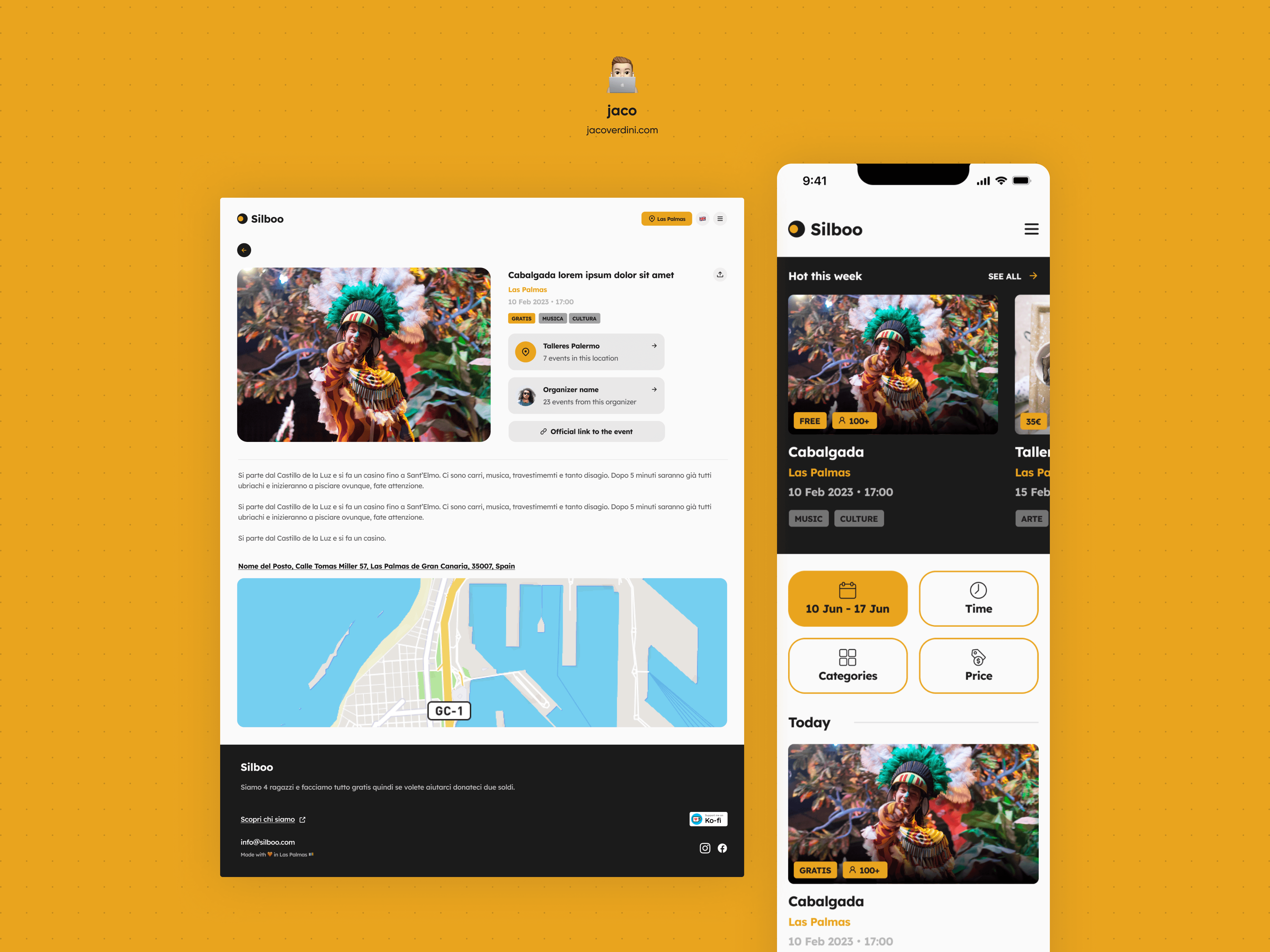
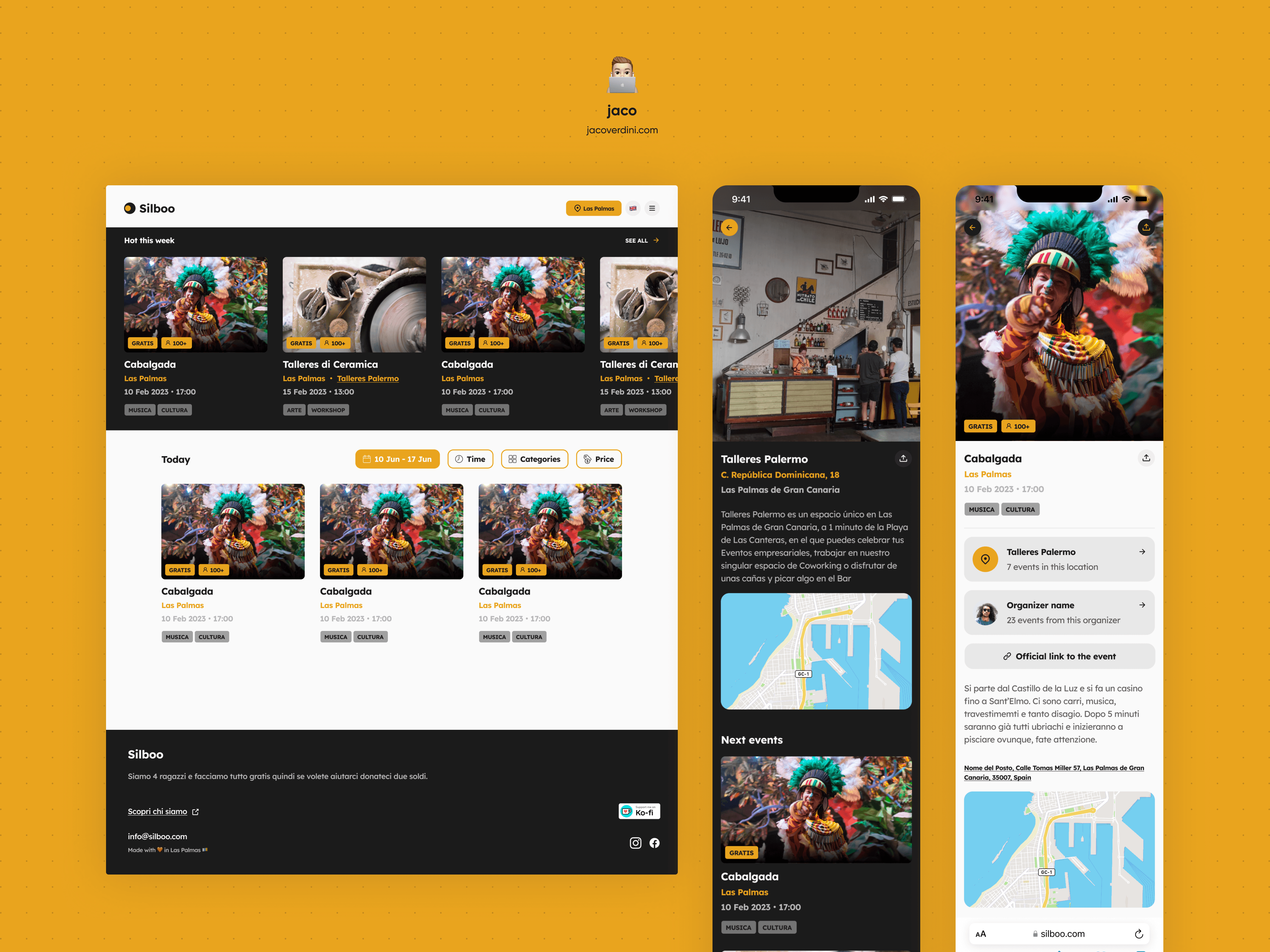
View all key information in one place (price, location, time, description, source)
Share events
The goal was to eliminate unnecessary steps and allow users to go from discovery to decision as quickly as possible.
2. Making event information immediately scannable
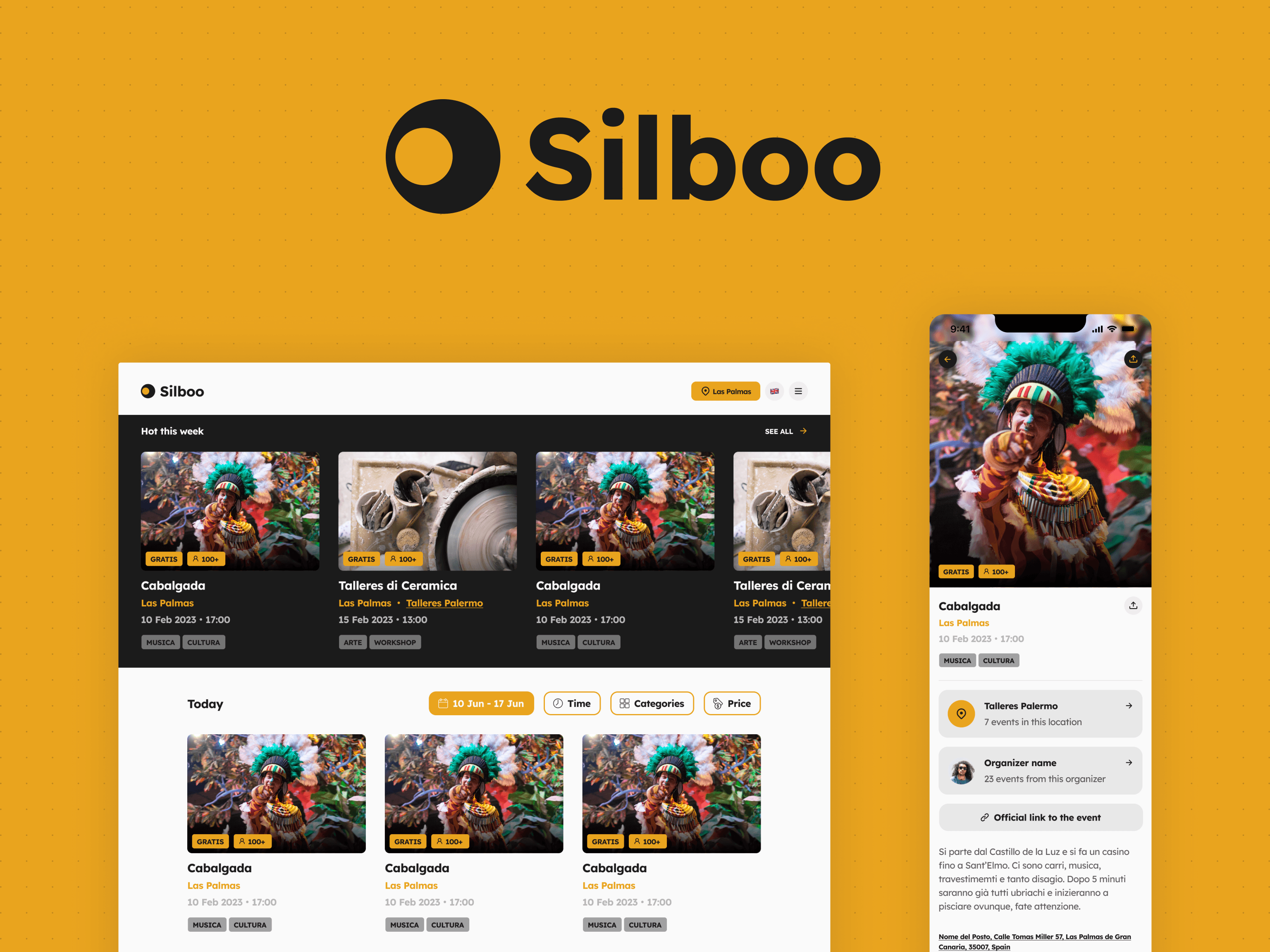
Event cards were designed to surface the most important details at a glance:
Event name
Date and time
Location
Price
Visual hierarchy was key—users could quickly scan multiple events without opening each one.
Additionally, I ensured that the original event source was always visible, improving transparency and trust.
3. Handling complex event structures with a flexible system
Events introduced structural challenges:
The same event could happen in multiple locations
Events could span multiple days
Organisers could host recurring sessions
To handle this, I designed a flexible event model that allowed:
Multiple dates and locations within a single event
Easy updates to event details
Clear presentation of variations without duplicating content
This ensured scalability as more events and cities are added.
4. Enhancing discovery through prioritisation and location awareness
User testing revealed two key improvements:
Users wanted to see the most relevant or popular events first
A map view would help contextualise events geographically
Based on this, I introduced:
Prioritised event listings
A map integration to visualise event locations
This made browsing more intuitive and context-driven.
Outcome
Outcome
Silboo is currently live in two cities and has already gained early traction:
Validated demand for a centralised event discovery platform
Positive user feedback on simplicity and clarity
Initial user adoption from both locals and digital nomads
The product has attracted interest for expansion into additional cities, and we are currently exploring funding opportunities.
Reflection
Reflection
Silboo allowed me to work across the full product lifecycle—from identifying a real-world problem to designing and validating a solution.
As both co-founder and designer, I had to balance:
User needs
Business viability
Technical feasibility
This experience strengthened my ability to think beyond individual features and design systems that can scale over time.